Tips on How to Conceive a Baby Boy
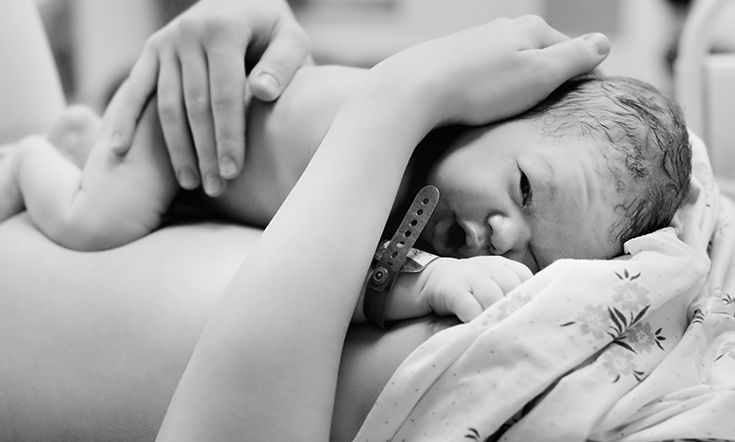

The placenta is the most important link between you and your baby. It sustains your baby’s life while inside you by feeding the baby all that it needs to grow and develop. Once you have given birth to your baby, you will need to deliver the placenta. While you’re holding your baby your health care provider might remind you to push gently to help expel the placenta.
After the delivery of your baby, contractions will continue, but they will not be as strong as the contractions you felt while you were in labour. The birth attendant can help by gently massaging your lower abdomen.
The uterus will feel like a hard round mass. Massaging the abdomen helps the uterus contract, which also helps stop bleeding. The placenta will separate from the wall of the uterus. As the placenta descends through the birth canal, you will again feel the urge to bear down and will push out the placenta. As this occurs, your doctor or birth attendant may tell you to bear down, and the placenta will be delivered. The placenta is usually delivered within 15-30 minutes after the baby is born.
The doctor or midwife will inspect the placenta to ensure it is unbroken and complete. If all, or parts of the placenta or membranes are left behind in the uterus, or if the patient haemorrhages while awaiting delivery of the placenta, this is called a “retained placenta” and it should be manually removed.
There are signs that indicate that the placenta has separated from the wall of the uterus, for example:
An average placenta is 22 cm long and two to two and half centimetres thick. It is thickest at the centre and becomes thinner peripherally. It typically weighs around 500 grams and is a dark reddish-blue, or maroon colour.
There are certain problems associated with the placenta during pregnancy. Some of these problems can be quite severe and may cause a threat for you and your baby. Your health care provider will monitor you regularly for signs of these placental problems.
Placental abruption is uncommon during pregnancy, affecting less than one percent of pregnancies, but it is considered to pose the most threat to both mother and baby. Most often, it occurs during the third trimester, but can happen earlier. It occurs when the placenta begins to detach from the uterine wall before labor and delivery. Placental abruption can be full or partial, and increases your chances of experiencing a preterm delivery. When serious, placental abruption can deprive your baby of much-needed oxygen and nutrients, leading to a stillbirth. It can also lead to severe blood loss in the mother, which can be fatal.
Placenta Previa occurs when the placenta is located very low in the uterus, covering the cervix. As a result, it stops your baby from easily entering the birth canal during labor and delivery. As with placental abruption, placenta previa can be full or partial. Possible complications of placental abruption include vaginal bleeding and preterm delivery.
Signs of Placenta Previa can be visible at the 20-week scan, and this is called a low-lying placenta. In this instance the mother is monitored and usually has a follow up scan at 32 weeks. Up until this time it is considered a ‘low-lying placenta’ rather than Placenta Previa. It is only after 32 weeks that it will be diagnosed. The placenta can move away from the cervix until quite late in the pregnancy, so many initial cases of Placenta Previa resolve themselves in time to deliver naturally.
Placenta Accreta is a rare type of placental problem, which occurs when the placenta attaches too tightly to the uterine wall, making it impossible to separate. Occasionally, placenta accreta can result in uterine rupture or bleeding.
All these conditions are uncommon and your care-giver will be trained to look for signs of these.
In Australian (western) society the placenta is treated as clinical waste, hence it is considered part of the ‘after-birth’, but more and more women are looking to other cultures’ interpretation of the role of the placenta, and are placing more emphasis on the spiritual role of the placenta. A recent study found that women in Australia who were intending to or had given birth at home, were deeply connected to their placenta.
This perception of the placental as clinical waste stems from a modern medicalisation of child birth, which limits our understanding of its role. With the breaking down of this medicalisation comes a deeper connection and appreciation of the role of the placenta, both through the pregnancy and beyond. Your midwife will be able to provide further information if you are considering keeping your placenta after the birth of your child.
Other non-western cultures have strong traditions associated with the placenta, for example:
Africa – In certain African nations, the placenta is swaddled in blankets and buried beneath a tree. This tree symbolizes ongoing life.
China – In Chinese culture the placenta is viewed as a life-giving force. It is dried and added to recipes in order to increase a persons energy and vitality.
Indonesia – The placenta is seen as the baby’s twin or elder sibling. This placenta will act as the child’s guardian angel throughout life. Therefore, it must be treated well, and is buried according to specific traditions. It is the father’s responsibility to clean, wrap and bury the placenta on the day of the birth.