Tips for Helping your Newborn Sleep through the Night
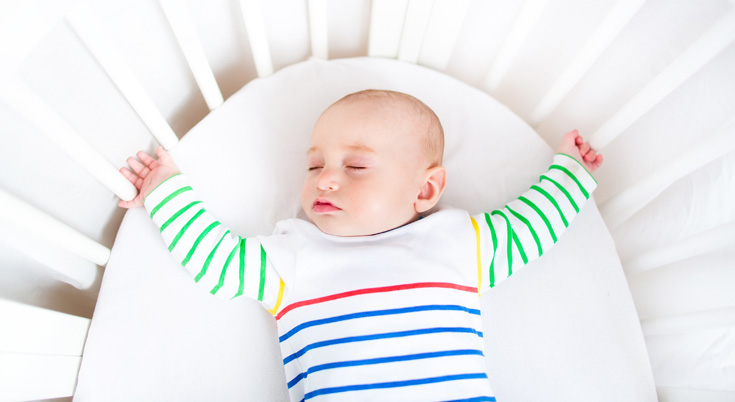
Getting a baby to sleep through the night is one of the first things new parents look forward to after coming home from the hospital. However, new parents have to remember that it takes time for the baby to sleep through the night. Newborns will sleep anything from sixteen to twenty hours a day, usually a couple hours at a time. Their small stomachs means that they need to eat frequently, so it will take time before they are physically ready to sleep all night. Most infants are capable of sleeping all night by about three months.

Tips for Helping your Newborn Sleep through the Night - sean mcgee / CC BY 2.0
Many parents set up a cradle in their room for those first few months to make those night-time feedings easier. Other families have adopted a co-sleeping method, where the baby is in the parents’ bed (with baby-proofing precautions, such as a rail on the outside edge and a firm mattress). But no matter which method works for your family, the baby can’t sleep through the night until they are physically ready to do so. Trying to force it too soon will just frustrate everyone.
One night, when the baby is around three or four months, you’ll wake up and realize they are still asleep. It’s a very nice feeling. But what do you do after you get used to it and they decide to not sleep all night again? By now, you should have a well-developed bedtime routine, but you may find you need to adjust things a little. Nap times begin to change, with the baby taking fewer and shorter naps. Sometimes simply adjusting the naps will take care of things, and your little one will be sleeping soundly all night again.
You may also need to adjust the before bedtime feeding a bit. If the baby’s tummy is full closer to bedtime, they will sleep longer. Getting the baby to sleep at least five to six hours is a good start when adjusting to going longer between feedings.
However, there are those babies who just don’t want to go back to sleep. They wake up either cranky or want to play. You have a few options. Some parents use the “cry it out” method, where they let the baby cry for increasing intervals, until they learn to fall asleep on their own. Others use a “peek in and check” method where they come in, but do not take the baby from the bed. They comfort them and help them drift back to sleep. Some have continued to use the co-sleeping method and just let the baby nurse and go back to sleep; some mothers barely realize the baby has been awake.
Another thing that might help is to give the baby a massage before bedtime. This can help the baby to relax more, and hopefully drift off into a deeper sleep. If they wake, you may want to give them a very short massage, possibly only on the arms and legs until they relax again.
Every child is different, so you need to find what works for you and your baby. Once you do, stick to it. Establishing a routine will help the baby realize that this is the way things are going to work. Before long, everyone is getting more sleep and feeling much more rested during the day.
Wonderful Sounds for Sleep
The environment that your baby enjoyed for nine long months in the womb was not one of absolute quiet. There was a constant symphony of sound — your heartbeat and fluids rushing in and out of the placenta. (Remember those sounds from when you listened to your baby’s heartbeat with the Doppler stethoscope?) Research indicates that “white noise” sounds or soft bedtime music helps many babies to relax and fall asleep more easily. This is most certainly because these sounds create an environment more familiar to your baby than a very quiet room.
Many people enjoy using soothing music as their baby’s sleep sound. If you do, choose bedtime music carefully. Some music (including jazz and much classical music) is too complex and stimulating. For music to be soothing to your baby, pick simple, repetitive, predictable music, like traditional lullabies. Tapes created especially for putting babies to sleep are great choices. Pick something that you will enjoy listening to night after night, too. (Using a tape player with an automatic repeat function is helpful for keeping the music going as long as you need it to play.)
There are widely available, and very lovely, “nature sounds” tapes that work nicely, too, as well those small sound-generating or white-noise devices and clocks you may have seen in stores. The sounds on these — raindrops, a bubbling brook or running water — often are similar to those sounds your baby heard in uterus. A ticking clock or a bubbling fish tank also make wonderful white-noise options.
“I went out today and bought a small aquarium and the humming noise does seem to relax Chloe and help her to sleep. I didn’t buy any fish though. Who has time to take care of fish when you’re half asleep all day?” Tanya, mother of 13-month-old Chloe
You can find some suitable tapes and Cd’s made especially for babies or those made for adults to listen to when they want to relax. Whatever you choose, listen to it first and ask yourself: Does this relax me? Would it make me feel sleepy if I listened to it in bed?
If you must put your baby to sleep in a noisy, active house full of people, keeping the tape running (auto rewind) will help mask baby-waking noises like dishes clanking, people talking, siblings giggling, TV, dogs barking, etc. This can also help transition your sleeping baby from a noisy daytime house to which he’s become accustomed subconsciously to one of absolute nighttime quiet.
Once your baby is familiar with his calming noise, or music, you can use these to help your baby fall back to sleep when he wakes up in the middle of the night. Simply sooth him by playing the music (very quietly) during the calming and falling-asleep time. If he wakes and cries, repeat this process.
If your baby gets used to his sleep time sounds you can take advantage of this and take the tape with you if you will be away from home for nap time or bedtime. The familiarity of these sounds will help your baby sleep in an unfamiliar environment.
Eventually your baby will rely on this technique less and less to fall and stay asleep. Don’t feel you must rush the process; there is no harm in your baby falling asleep to these gentle sounds. When you are ready to wean him of these you can help this process along by reducing the volume by a small amount every night until you finally don’t turn the music or sounds on at all.
Babies enjoy these peaceful sounds, and they are just one more piece in the puzzle that helps you to help your baby sleep – gently, without any crying at all.
Article reproduced with permission of Elzabeth Pantley. For more information you may like to visit her website: http://www.pantley.com/elizabeth